
Polish Actresses – The 40 Best Female Actors of Post-War Cinema
During the communist era, these Polish actresses created unforgettable performances on the big screen that have gone down in cinema history. They captivated—and continue to captivate—audiences not only with their beauty, but above all with their talent and remarkable ability to bring their female characters to life. Fascinating, beautiful, funny, or melodramatic—here are 40 names of the great actresses of classic Polish cinema.
The best Polish actresses of post-war cinema
1. Irena Kwiatkowska (1912 – 2011)
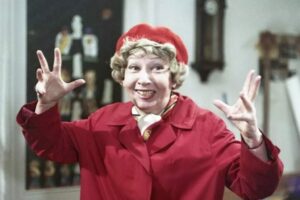
Irena Kwiatkowska in Being Forty
Our list of the best post-war Polish actresses begins with Irena Kwiatkowska, born in 1912. Even before the war, she graduated from the State Institute of Theater Arts and began performing in theaters. After the outbreak of the war, she worked as a cook at ZASP. She took part in the Warsaw Uprising as a liaison for the “North” group. In the postwar period, she became associated with the Kraków cabaret Siedem Kotów (Seven Cats), where she collaborated with Konstanty Ildefons Gałczyński. She performed in theaters and at the Dudek and Elderly Gentlemen’s Cabarets, worked as a radio announcer, and appeared in films and TV series. She was undoubtedly one of the most outstanding Polish comedy actresses.
She won the hearts of viewers in phenomenal TV roles: as Zofia Jankowska, the mother of teenage Paweł in “War at Home” (“Wojna domowa”) and the Working Woman in Jerzy Gruza’s “Being Forty”. Among her successful performances, those in the comedies “The Bachelors’ Club,” “The Woodpecker,” and “Controlled Conversations” are also worth mentioning. In her private life, Irena Kwiatkowska was married to radio announcer Bolesław Kielski. She had no children.
2. Krystyna Feldman (1916 – 2007)
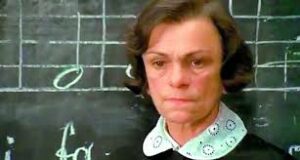
Krystyna Feldman, “Yesterday”
A brilliant Polish actress, gifted with an exceptional talent for both comedic and dramatic roles. She usually played supporting roles, but still created a wealth of outstanding performances. She came from a family with a tradition of acting; her father, Ferdynand Feldman, was an outstanding performer of Shakespearean characters, and her mother sang in the opera. Krystyna Feldman studied at the State Institute of Theater Arts in Warsaw and later performed in Lviv.
During World War II, she was a member of the Home Army and served as a liaison officer. She made her film debut in Jerzy Kawalerowicz’s “Celulose” (1953). She played various roles in films by Andrzej Barański and Stanisław Różewicz. The turning point in her career was the role of the aunt in Radosław Piwowarski’s “Yesterday” (1984). Poles particularly took a liking to her for her portrayal of the grandmother in the TV series “The Lousy World”.
The role of a lifetime came very late for Krystyna Feldman – in 2004 – but it allowed her to demonstrate the extraordinary talent she had honed over several decades on stage and in film. The actress took on a male role—she played an artist from Krynica in Krzysztof Krauze’s film “My Nikifor.” Her performance won numerous awards, including an Eagle at the Gdynia Film Festival.
3. Danuta Szaflarska (1915 – 2017)
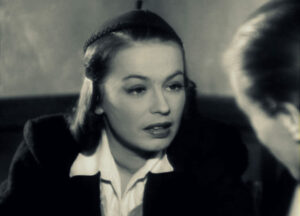
Danuta Szaflarska in Forbidden Songs
And another famous Polish actress—Danuta Szaflarska. She received her training and made her debut before the outbreak of World War II – in 1939, she graduated from the State Institute of Theater Arts in Warsaw and performed at the Teatr na Pohulance in Vilnius. She took part in the Warsaw Uprising. Her face became famous thanks to the first post-war Polish film – Leonard Buczkowski’s “Forbidden Songs”, in which she played Halina, mourning the death of her fiancé who had fallen in battle.
In the comedy “The Treasure” (1949) by the same director, she played the lead role of Krysia, who, along with her husband (Jerzy Duszyński), shared an apartment with other tenants amid difficult circumstances. These two roles secured her status as a star of post-war cinema. She later appeared in films directed by Jan Rybkowski, Antoni Bohdziewicz, Kazimierz Kutz, and Różewicz.
In the 1980s, Szaflarska began to be cast in roles as older, nurturing heroines, such as in Tadeusz Konwicki’s “The IssaValley”. She created an interesting character in the popular comedy “How Much Does the Trojan Horse Weigh?”, and one of her most outstanding performances is that of the lonely old woman Aniela in Dorota Kędzierzawska’s “Time to Die” (2007). The actress had two husbands: pianist Jan Ekier and radio announcer Janusz Kilański, and two daughters: Maria and Agnieszka. Danuta Szaflarska was the longest-living and longest-performing Polish actress.
4. Alina Janowska (1921 – 2017)
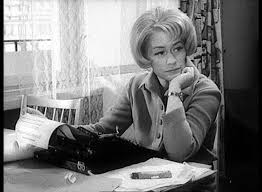
Alina Janowska in War at Home
Alina Janowska is among the finest Polish actresses of the communist era. During the war, as a young girl, she endured dramatic experiences. She was imprisoned in a POW camp near Olsztynek (she was the daughter of a military officer), was arrested by the Gestapo, and spent over six months in Pawiak Prison; she then joined the Warsaw Uprising as a liaison for the “Kiliński” battalion. She began her acting career after the war (she had studied at a music school in the 1940s) on the stage of the Syrena Theater in Łódź. From there, she went on to star in the first post-war Polish film—Leonard Buczkowski’s “Forbidden Songs”—where she sang “Red Apple.”
She played a partisan in Wanda Jakubowska’s outstanding film “The Last Stage”. She portrayed complex female characters in films by Andrzej Wajda (“Samson”) and Jan Rybkowski (“Those Who Are Late”), but also took on comedic roles, such as in Włodzimierz Haupe’s “Matrimonial Handbook”. However, her greatest popularity came from her role in Jerzy Gruza’s TV series “War at Home”. In it, she played Irena Kamińska, a kind-hearted woman with whom her teenage niece Anula moves in.
With her exceptional performance, full of warmth, humor, and feminine charm, she permanently won the hearts of viewers. She subsequently appeared in comedies and dramas. For years, she starred in the popular series “Złotopolscy”. For her role as an elderly woman trying to recover a valuable necklace through gambling in Izabela Szylko’s film “Infallible” (2008), she received numerous awards. She was married three times. She had three children: Agata, Michał, and Katarzyna. Her son, Michał Zabłocki, is a poet.
5. Aleksandra Śląska (1925 – 1989)
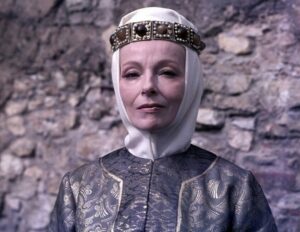
Aleksandra Śląska as Queen Bona
One of Poland’s most prominent actresses, a master of theatrical roles who also gained popularity in films and television series – Aleksandra Śląska. She graduated from the Academy of Theatre Arts in Kraków and went on to perform at Warsaw’s Współczesny and Ateneum theaters. She made her big-screen debut in Wanda Jakubowska’s film “The Last Stage”, the world’s first film about the Holocaust. She excelled in psychological cinema. She delivered a compelling performance in Rybkowski’s “The Lonely House”. She starred in Has’s “The Noose” (1957), playing the partner of the alcoholic Kuba (Gustaw Holoubek). And one of her most outstanding roles was that of an SS woman in Andrzej Munk’s “The Passenger” (1963).
However, audiences remembered Aleksandra Śląska above all as Queen Bona in the intriguing TV series and film adaptation of Janusz Majewski’s “An Epitaph for Barbara Radziwill” The actress’s first husband was Czesław Górski, and her second was Janusz Warmiński, director of the Ateneum Theater. She had one son.
6. Barbara Krafftówna (1928 – 2022)
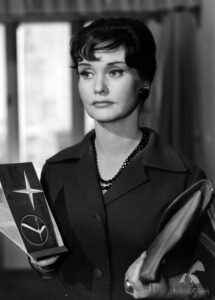
Barbara Krafftówna in How to Be Loved
It is impossible to imagine a list of the most outstanding Polish actresses without this name: Barbara Krafftówna. She studied acting during the war in Kraków at the underground Drama Studio attached to the Stary Theater. She later performed on stage and made her film debut in Rybkowski and Jan Fethke’s “Matter to Be Settled”. Her most outstanding role turned out to be her San Francisco-award-winning performance in Has’s “How to Be Loved” (1962), where she played a woman who sacrifices everything for the man she loves.
She created an extraordinarily profound character, evolving over many years—from the wartime period, when Felicja hides Wiktor (Zbigniew Cybulski) in her Kraków apartment. Krafftówna’s second, immensely popular role was the likable Honorata from the TV series “Four Tank-Men and a Dog.”
Krafftówna was a versatile actress who achieved mastery in both dramatic and comedic roles. She successfully showcased this latter facet in films and TV series such as Kazimierz Kutz’s “Heat” Bareja’s “Adventure with the Song” Paweł Komorowski’s “The Adventures of Sir Michael” and J. Gębski’s “Filip z konopi.” The artist’s comedic repertoire was complemented by her performances in the famous Elderly Gentlemen’s Cabaret. Krafftówna’s private life was full of personal tragedies. Both of her husbands died unexpectedly of heart attacks, as did her only son, Piotr, whom she lost in 2008.
7. Lucyna Winnicka (1928 – 2013)
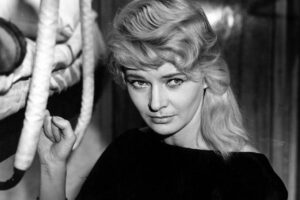
Lucyna Winnicka in Night Train
Lucyna Winnicka, a beautiful, talented actress who served as the muse of Jerzy Kawalerowicz’s films. She made her debut in “Under the Phrygian Star”, directed by her future husband, in 1954. It was on the set of this film that a great romance blossomed with Kawalerowicz, who was married at the time, a romance that led to a long-lasting marriage and the birth of two children. The couple’s collaboration on screen, however, resulted in outstanding films and remarkable performances by Winnicka.
In “Night Train” (1959), a landmark film of the Polish Film School, the actress played Marta, a young woman traveling by train from Warsaw to Hel. Her stunning beauty, along with her evocative acting and skillfully showcased femininity, were highly praised by audiences and critics alike. For her role, she received a Special Mention in Venice.
The duo’s most outstanding collaborative work, however, was “Mother Joan of the Angels” (1961), based on a short story by Jarosław Iwaszkiewicz. The demanding role of the mother superior of a Ursuline convent, from whom a Jesuit is tasked with exorcising an evil spirit, still amazes today with the depth and multi-layered nature of her acting. The film won the Silver Palm at Cannes, losing to Luis Buñuel’s “Viridiana.” Despite her great cinematic successes, Lucyna Winnicka decided to give up acting at the height of her career, a decision that coincided with the breakdown of her marriage to Kawalerowicz. The artist turned to journalism, travel, and the practice of alternative medicine. She founded the Academy of Life, where she promoted a lifestyle inspired by Eastern philosophy.
8. Kalina Jędrusik (1931 – 1991)
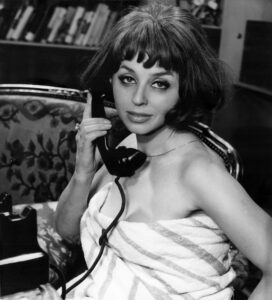
Kalina Jędrusik in A Cure for Love
Among the most beautiful and alluring Polish actresses, Kalina Jędrusik ranks among the very best. Her image was built primarily on her erotic appeal, although sex appeal was not the only asset of this exceptional artist. Jędrusik graduated from the State Higher School of Drama in Kraków and made her film debut in the comedy “Eva Wants to Sleep” (1957). It was in this genre that she created brilliant, funny, and memorable roles. Notable examples include Kutz’s “Heat” (1964), Jan Batory’s “A Cure for Love” (1965), and Jerzy Gruza’s “The Woodpecker” (1970). She was also an irreplaceable artist in Jerzy Wasowski and Jeremi Przybora’s Elderly Gentlemen’s Cabaret.
Her acting repertoire is dominated by supporting roles, though they are vivid and complex. Charismatic on screen, with an incredibly sensual, husky voice and a seductive gaze, she captured the male imagination while simultaneously enchanting with her lyricism and mystery. Among her successful performances are those in Janusz Morgenstern’s “Jowita” and Has’s “The Doll”. Her iconic role, however, remains that of Lucy Zuckerowa, Borowiecki’s lover in Andrzej Wajda’s “The Promised Land”. Kalina Jędrusik’s husband was the writer Stanisław Dygat, with whom she formed a famous and at the same time eccentric couple for many years.
9. Teresa Iżewska (1933 – 1982)
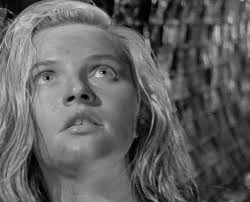
Teresa Iżewska in Kanal
Another popular Polish actress—Teresa Iżewska. She made her debut in Andrzej Wajda’s “Kanal” (1956). She went down in the history of Polish cinema as an exceptionally beautiful young woman who captivated audiences. Her role as Stokrotka, a liaison officer during the Warsaw Uprising who guides the wounded Lieutenant Korab (Tadeusz Janczar) through the titular sewer, became an iconic portrayal for this actress. She received a nomination for the prestigious BAFTA Award for this role. In total, she had only a few film roles to her credit, but thanks to Stokrotka, she secured an unquestionable place in the history of Polish cinema.
Among Iżewska’s major acting challenges were also the films: “The Depot of the Dead” (1958), “Rancho Texas,” and “Oil”. In the first of these films, directed by Czesław Petelski and based on a short story by Marek Hłasko, she played Wanda, the wife of party activist Zawada. Her attractive, promiscuous character, who becomes the object of desire for the Bieszczady workers, resonated with the image from Wajda’s film—in the 1950s, Iżewska was the embodiment of feminine sex appeal and charm. She was married three times: to singer Andrzej Wincior, director Piotr Paradowski, and actor Zbigniew Grochal. She had a daughter, Ewa. She died tragically as a result of one of her many suicide attempts, which proved fatal.
10. Jadwiga Barańska (1935 – 2024)
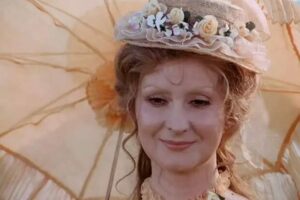
Jadwiga Barańska in Nights and Days
Jadwiga Barańska holds an important place among the best Polish actresses of postwar cinema. She graduated from the State Higher School of Drama in Łódź and went on to perform in theaters. She made her film debut with a cameo appearance in Jerzy Zarzycki’s “Soldier of the Queen of Madagascar” (1958). She achieved her greatest cinematic successes in films directed by her husband, Jerzy Antczak. She delivered magnificent performances in period films. In 1968, she played Countess Cosel in a film based on a novel by Józef Kraszewski. Thanks to her role as Barbara Niechcicowa in the film adaptation of Maria Dąbrowska’s novel “Nights and Days” (1975), she became an icon of Polish cinema.
It is hard to imagine any other actress today as the nervous Basia, the wife of the staid Bogumił, eternally in love with the handsome Toliboski, who throws a bouquet of beautiful water lilies plucked from the lake at her feet. Barańska and Jerzy Bińczycki formed an unparalleled, outstanding duo on screen, delivering a masterful display of acting that moves and delights. The actress was awarded the Silver Bear, and the film itself received an Oscar nomination.
Jadwiga Barańska also played Idalia, the aunt of the heir Michorowski, in Jerzy Hoffman’s “The Leper” (1976). And in the film “Chopin: The Desire for Love” (2002), she played the mother of the famous composer. She lived with her family in the United States for several decades. She had a son, Mikołaj.
11. Grażyna Staniszewska (1936 – 2018)
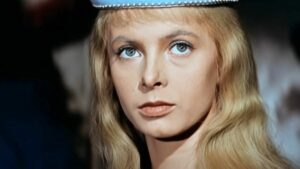
Grażyna Staniszewska in Knights of the Teutonic Order
A prominent figure among Polish actresses of the communist era: Grażyna Staniszewska. She studied at the State Higher School of Drama in Warsaw and performed on theater stages. She made her film debut in Antoni Bohdziewicz’s “Charcoal Sketches”. She starred in Kutz’s “Cross of Valor”, and in Wajda’s “Ashes and Diamonds” she sang “The Red Poppies on Monte Cassino”. However, her place in the history of Polish cinema was secured by her role as Danusia Jurandówna in the film adaptation of “Knights of the Teutonic Order” (1960), directed by Aleksander Ford. She created a captivating portrayal of an ethereal court lady of angelic beauty, for whom Zbyszko of Bogdaniec is willing to make the ultimate sacrifice. Unfortunately, the role of Jurandówna typecast the actress for years, and she was not offered anything interesting afterward.
Staniszewska’s second significant role was in “Jealousy and Medicine” (1973), directed by Janusz Majewski. In this adaptation of Michał Choromański’s pre-war novel, she played the former lover of the main character, Widmar (Roman Dmochowski). Her performance in Konwicki’s “Lava. A Tale of Adam Mickiewicz’s ‘Forefathers’ Eve” (1989) is also noteworthy. The actress was married to Professor of Medicine Wojciech Noszczyk, with whom she had two children.
12. Maja Komorowska (1937)
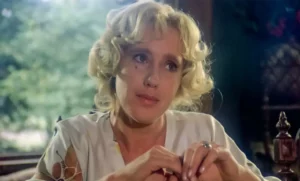
Maja Komorowska in Maids of Wilko
A unique figure among post-war Polish actresses – Maja Komorowska. The actress comes from an aristocratic background. She studied at the Puppetry Department of the State Higher School of Theater in Kraków. She performed extensively in theaters before making the transition to film. In cinema, she created a very consistent, distinctive image of a heroine somewhat detached from reality, living in a world of dreams, often out of place in the environment in which she found herself.
She was one of Krzysztof Zanussi’s favorite actresses, appearing in over a dozen of his films, starting with “Family Life” (1970). She received awards at the Polish Feature Film Festival in Gdynia for her roles in “The Quarterly Balance” (1975) and “At Full Gallop” (1996). She starred in Konwicki’s “How Far Away, How Near” and played Rachel in Wajda’s “The Wedding.”
The turn of the 1980s and 1990s slightly altered Komorowska’s acting repertoire. She began portraying mature women with high ethical standards, endowed with wisdom and empathy. Her role in Krzysztof Kieślowski’s “Decalogue I” had a particular influence on this. She gained great popularity for her period-drama portrayal of a Polish noblewoman who, after the January Uprising, follows her husband to Siberia in the TV series “Maidens and Widows.” She also appeared as a professor’s wife in Wajda’s “Katyń.” Her husband was Jerzy Hubert Tyszkiewicz, with whom she has a son.
13. Beata Tyszkiewicz (1938)
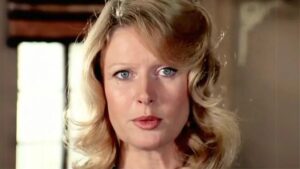
Beata Teyszkiewicz in Polish Roads
A very famous Polish actress and one of the great ladies of Polish cinema. Beata Tyszkiewicz was born into an aristocratic family and holds the title of countess. She studied at the State Higher School of Drama in Warsaw but never graduated. She began appearing in films while still a teenager, starting with the role of Klara in the film adaptation of Aleksander Fredro’s “The Revenge” (1957). She was primarily cast as beautiful, impassioned young ladies from noble manors and distinguished aristocrats. Among her most notable portrayals of this type are her roles in “The Ashes,” “The Saragossa Manuscript” and the comedy “Maria and Napoleon.” The most significant character in her acting career was Izabela Łęcka in “The Doll,” directed by Has.
Wajda’s film “Everything for Sale” also held special significance in Beata Tyszkiewicz’s career, due to the biographical overlap between her character and herself. In her private life, the actress was married to Wajda and had a daughter, Karolina, with him. She also starred in other significant film adaptations of Polish literature, such as “Nights and Days,” “The Comedienne”, “Two Moons”, and “The Girl with the Wet Hair” (1994). Among Beata Tyszkiewicz’s notable achievements is her complex role in the TV series “Polish Roads”. The actress had three husbands; in addition to Wajda, her spouses were director Witold Orzechowski and architect Jacek Padlewski. She has two daughters: Karolina and Wiktoria.
14. Elżbieta Czyżewska (1938 – 2010)
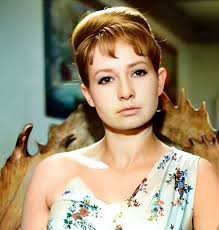
Elżbieta Czyżewska in A Wife for an Australian
One of the biggest stars among Polish actresses of the Polish People’s Republic: Elżbieta Czyżewska. She graduated from the State Academy of Dramatic Art and began appearing in short films directed by her then-husband, Jerzy Skolimowski. She was also associated with the Student Satirical Theater. Then she was discovered by comedy cinema—she became a major star of the genre. She appeared in films by Bareja (“Husband of His Wife”, “A Wife for an Australian,” “Marriage of Convenience”), Tadeusz Chmielewski (“Where Is the General?”), and Stanisław Lenartowicz ( “Giuseppe in Warsaw”).
However, she was not pigeonholed solely as the queen of comedy, as she also proved herself to be an excellent dramatic actress in Aleksander Ford’s “The First Day of Freedom” and Janusz Nesfeter’s “The Unloved.” Among Czyżewska’s significant artistic roles is also Wajda’s film “Everything for Sale” (1969), centered on the death of Zbigniew Cybulski, in which the actress played a character resembling herself.
Czyżewska’s career suffered a dramatic collapse following the events of March 1968. Her marriage to David Halberstam, an American correspondent for The New York Times, contributed to this. The journalist was expelled from the country for a critical article on Polish politics during the Gomułka era, and the actress, though she did not want to leave the country, was forced to do so by harassment from the security services and defamatory press articles. After moving to the U.S., she settled in New York, but she was unable to establish a career overseas. Andrzej Wajda cast Czyżewska in two plays produced in the U.S.— “Demons” (1974) and “White Marriage” (1977), but this did not help the actress break through on the American stage.
15. Iga Cembrzyńska (1939)
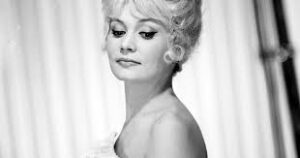
Iga Cembrzyńska, NAC
Iga Cembrzyńska, who is immensely popular with audiences, is the great muse of Andrzej Kondratiuk’s films—and, in her private life, the actress’s husband. She graduated from the State Higher School of Drama and made her debut on Television Theater and at the Powszechny Theater. She made her film debut in Wojciech Jerzy Has’s “The Saragossa Manuscript” (1964) as Princess Emina. Another significant role of hers was Kowalski’s wife in Tadeusz Konwicki’s “Jump” (1965). Starting in the 1970s, she began appearing in Kondratiuk’s films, beginning with “Water-Puzzle” (1970).
In the following decades, she became a star of the director’s intimate cinema, as well as a co-producer of his films. “Stardust” and “Four Seasons” are Kondratiuk’s signature works, philosophical parables about a simple life in harmony with nature, far from the destructive forces of civilization. However, Cembrzyńska did occasionally break her husband’s monopoly on films: she delivered successful performances in Barbara Sass’s “The Scream” and Filip Bajon’s “Engagement.”
Iga Cembrzyńska was also long associated with the Polish stage. She performed at major festivals and received awards for songs such as “Intimate World” and “She Wore a Yellow Ribbon” – both honored in Opole. However, she decided to end her singing career. In a conversation with Elżbieta Królikowska in 1984, she said: “At some point, singing started to get in the way. People, audiences, and those who cast me began to forget that I’m an actress (…) At some point, you have to decide: either you want to be recognized on the street and get special treatment at the butcher shop, or you want to be an actor.”
16. Ewa Krzyżewska (1939 – 2003)
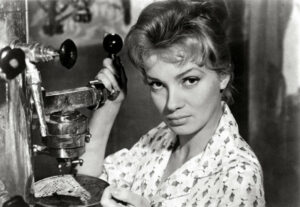
Ewa Krzyżewska, Ashes and Diamonds
Although she did not appear on screen for very long, this actress left a lasting impression thanks to her exceptional beauty and memorable roles. Ewa Krzyżewska studied at the State Higher School of Drama in Kraków; audiences first saw her on screen as Krystyna Rozbicka in Wajda’s “Ashes and Diamonds” (1958), where she played a bartender and the love interest of Maciek Chełmicki. Her successful performance alongside Zbigniew Cybulski was recognized by international critics, and the actress received the Crystal Star from the French Film Academy for her role. She appeared in films by Tadeusz Konwicki, Stanisław Możdżeński, Jan Rybkowski, and Jerzy Zarzycki. However, her second outstanding role, aside from Krystyna in “Ashes and Diamonds,” was Rebeka in Janusz Majewski’s drama “Jealousy and Medicine” (1973). The character of the unfaithful wife was also the last in her filmography. The actress abandoned her career and moved to New York.
Ewa Krzyżewska was the daughter of the poet Juliusz Krzyżewski. She had two husbands: Andrzej Spława-Neyman and the diplomat Bolesław Kwiatkowski. She died tragically in Spain in a car accident.
17. Barbara Kwiatkowska-Lass (1940 – 1995)
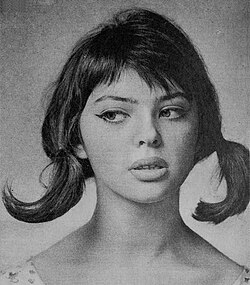
Barbara Kwiatkowska-Lass
The stunning Polish actress who captivated audiences with her unique beauty and charm: Barbara Kwiatkowska-Lass. One of the few Polish stars who had the chance to launch a major international career. She began her career as a dancer with the Skolimów Song and Dance Ensemble. She made her debut in the lead role of Chmielewski’s excellent comedy “Eva Wants to Sleep”, for which she received a Golden Duck nomination, followed by roles in films by Rybkowski, Zarzycki, Munk, and Polanski.
In 1959, she emigrated from Poland and starred in European films under the pseudonym Lass, alongside Jean-Louis Trintignant (“The Thousandth Eye”) and Alain Delon (“What a Joy to Live”). Her first husband was Roman Polanski, whose heart she broke by leaving him for actor Karlheinz Böhm (who played Franz Joseph in the famous Sissi film series), with whom she had a daughter, Katharina. She collaborated with Radio Free Europe and was also active in organizing charitable aid for Poland after martial law was imposed.
The star also appeared in Polish cinema. Her particularly acclaimed Polish roles include “Jowita” (1967) by Janusz Morgenstern, based on Dygat’s novel “Disneyland,” as well as her performance in Kondratiuk’s film “How It’s Done” (1970) and Basia in Wajda’s “Love at Twenty” Barbara Kwiatkowska’s third husband was jazz musician Leszek Żądło, with whom she remained until the end of her life. She died suddenly of a stroke at the age of 55.
18. Emilia Krakowska (1940)
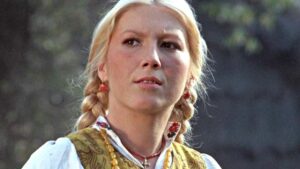
Emilia Krakowska in The Peasants
Although she did not have many roles, this actress helped shape a classic of Polish cinema. Emilia Krakowska studied at the State Academy of Dramatic Art in Warsaw and performed in theaters. Directors saw in her a charming portrayer of beautiful country girls. It was as the young peasant girl Malina that she appeared in Andrzej Wajda’s “The Birch Wood” (1970), based on a story by Iwaszkiewicz. She played the Hostess, the bride’s sister, in “The Wedding” (1972). And it was she who portrayed Jagna in the memorable film adaptation of Władysław Reymont’s “The Peasants” (1973), directed by Jan Rybkowski. Her long, golden braids and fiery eyes almost merged with the common image of the famous literary character.
As a mature actress, she frequently appears in TV series – “For Better and for Worse,” “Colors of Happiness,” and “On Wspólna Street.” Another highly successful role was her performance in the comedy “The Body” (2003), where she played a hired killer. She has received numerous awards for her artistic work. She has been married three times and has two daughters.
19. Marta Lipińska (1940)
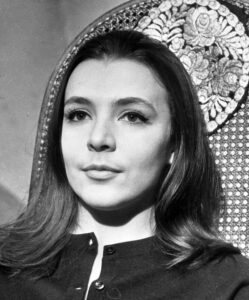
Marta Lipińska in Jump
A supporting actress, yet so memorable and with such excellent technique. Marta Lipińska studied in Warsaw, graduated from the State Higher School of Drama, and then made her debut in theater and on the radio. She played her first film role in Paweł Komorowski’s “Red Berets” (1962). Initially, she played sweet, charming young women, as in Stanisław Różewicz’s films. Among her most notable roles is the one in Tadeusz Konwicki’s “Jump”. She also portrayed several interesting characters in literary adaptations: “The Issa Valley”, “The Doll” and one of the best of her career – in “On the Banks of the Niemen” (“Nad Niemnem”, 1987), directed by Zbigniew Kuźmiński. She captivated audiences as the hysterical, perpetually “sick,” and yet constantly dreamy Emilia, Korczyński’s wife.
Marta Lipińska continues to appear in films and TV series, where she most often plays funny characters or warm and wise mothers and aunts. Notable examples include the comedy “Never in My Life” and the series “The Honeymooners” and “The Ranch”. The actress has walked down the aisle twice. The first time with cinematographer Krzysztof Wiśniewicz, and the second with director Maciej Englert, the brother of Jerzy Englert. Lipińska has two children.
20. Pola Raksa (1941)
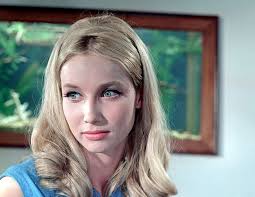
Pola Raksa in Adventure with a Song
It is impossible to imagine any list of the best Polish actresses without Pola Raksy. She is one of the biggest names in Polish cinema, immortalized in the cult hit by the band Perfect. Perhaps the name she bore – that of the greatest Polish star (not only among pre-war Polish actresses), Pola Negri, was already a name of immense significance in the history of Polish cinema, perhaps foreshadowing a great career for the future artist. She studied at the PWSTiF in Łódź and made her debut in Antoni Bohdziewicz’s “Reality” (1960). She played beautiful, ethereal young women in both youth-oriented films and costume dramas. Notable examples include Maria Kaniewska’s “The Devil from Seventh Grade” (1960) and “A Lady from the Window” (1964), as well as Anna Sokołowska’s “Beata.”
She created an important role in Wajda’s “Ashes,” based on the prose of Stefan Żeromski, where she played Helena de With, the youthful love of Rafał Olbromski. She became wildly popular, however, thanks to her role as Marusia in the TV series “Four Tank-Men and a Dog.” To this day, this remains an iconic role for the beautiful Pola Raksy, securing her status as a major star of the 1960s and 1970s. She later appeared occasionally in films, but in the 1990s she left the film industry to pursue a career in fashion.
She was married to cinematographer Andrzej Kostenko, with whom she has a son, Marcin. In an interview with “Film” in 1970, the actress said: “Our cinema is dominated by men. Men fight, suffer, and face problems; women play a supporting role in the world—they are there to comfort, listen, and support. Their feminine concerns are treated with indulgence, if not sarcasm.”—perhaps that is why she ultimately became disillusioned with cinema?
21. Barbara Brylska (1941)
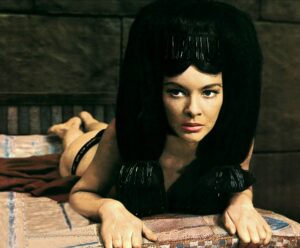
Barbara Brylska in Pharaoh
The true sex symbol of communist Poland, one of the most beautiful Polish actresses of the 1960s and 1970s – the wonderful Barbara Brylska. Her star rose in period films. She became famous for her role as the sensual Phoenician priestess Kama in “Pharaoh” (1966), directed by Jerzy Kawalerowicz. Poles fell in love with her as Krzysia in “Colonel Wolodyjowski” (1969). She was a great muse to many directors throughout the Eastern Bloc. In Roman Załuski’s acclaimed “The Anatomy of Love,” she formed a bold erotic duo with Jan Nowicki. In the first decade of the 21st century, she played many roles as a mother, such as in Bogusław Linda’s film “The Skylights”. She portrayed intriguing characters in social, thriller, and war films.
In her private life, Barbara Brylska had two husbands: Jan Borowiec and Ludwik Kosmal. In 1993, she suffered a personal tragedy: her daughter, Barbara Kosmal, died tragically in an accident.
22. Teresa Tuszyńska (1942 – 1997)
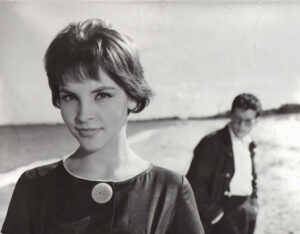
Teresa Tuszyńska in Goodbye, Till Tomorrow
Although Teresa Tuszyńska did not play many roles, she still made her mark on Polish cinema. She began to conquer the world as a very young girl—a model. At the age of 16, she won a contest held by the weekly magazine “Przekrój” under the slogan: “Beautiful Girls for the Screen” and soon appeared in Rybkowski’s film “Last Shot” (1958). Her most outstanding and memorable role was that of the French consul’s daughter in Janusz Morgenstern’s “Goodbye, Till Tomorrow.” Here she played the lead character: a modern, somewhat dreamy girl curious about the world. She was partnered by Zbigniew Cybulski, and Margueritte’s truly magnetic, European image opened the door to a great career for Tuszyńska. She starred in Kutz’s “Tarpany,” Stefan Stawiński’s “No More Divorces,” and Lenartowicz’s “Full Steam Ahead.”
Unfortunately, she could not cope with her great success. She fell into alcoholism, which hindered her subsequent performances and caused increasing turmoil in her private life. She became entangled in numerous romances and difficult relationships with men. Under the influence of alcohol, she engaged in brawls; as a result of one of them, she was sentenced to a year in prison. Kazimierz Kutz said of her: “Her professional career also ultimately collapsed, and in the end, Tuszyńska, in the literal sense, simply vanished. I wasn’t the only one who felt sorry for her. Everyone around her felt sorry for her, and some even felt a little guilty.”
23. Ewa Wiśniewska (1942)
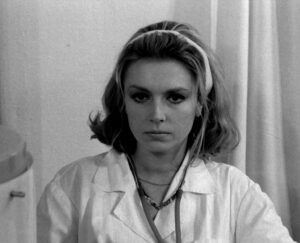
Ewa wiśniewska in Doctor Eva
A true lady of Polish cinema – Ewa Wiśniewska. She is the sister of another well-known actress, Małgorzata Niemirska. She made her first forays into film after winning a contest organized by “Film” “Beautiful Girls on Screen.” She graduated from the Warsaw State Academy of Dramatic Arts. She caught the attention of audiences and critics alike, captivating them with her girlish charm, after appearing in the films “The Law and the Fist” by J. Hoffman and E. Skórzewski and “Alone in the City” by Halina Bielińska. Her role as a doctor in the TV series “Doctor Ewa” (1970) brought her widespread recognition.
A turning point in her acting career was Kutz’s film “Beads of a Single Rosary,” in which she portrayed a complex female character. One of Wiśniewska’s most outstanding artistic achievements is her role as Róża in “The Stranger” (1986), directed by Ryszard Ber. Here, she portrayed an unfulfilled violinist and pianist who spends her entire life reminiscing about her youthful love. The film was based on a novel by Maria Kuncewiczowa.
Ewa Wiśniewska also won prestigious awards for her role as Princess Kurcewiczowa in “With Fire and Sword” (1999) and as the grandmother of two sisters growing up during the communist era in Kinga Dębska’s “Bck Then” (2021). She has been married three times. For a long time, she was in a relationship with Krzysztof Kowalewski. She has a daughter, Grażyna.
24. Anna Seniuk (1942)
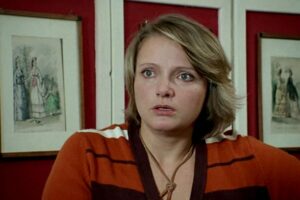
Anna Seniuk in Being Forty
Another widely recognized Polish theater and film actress whose career peaked during the communist era. Anna Seniuk studied at the State Higher School of Drama in Kraków and went on to perform at the Stary Theater until the 1970s. At the same time, she successfully made the transition to film. Initially, she was cast in roles as country girls, maids, or waitresses. A change came with Roman Załuski’s “The Cardiogram” (1971), where she played an attractive married woman entangled in a forbidden affair.
Her on-screen immortality was secured by her portrayal of Magda, the wife of engineer Karwowski, in the popular TV series “Being Forty”. She played this character brilliantly, highlighting all her virtues and discreetly hinting at her amusing flaws. She appeared in the tasteful film adaptation of “The Maids of Wilko” directed by Wajda, in the Petelskis’ “Return Ticket,” and also portrayed Handzia in the famous “The Linnet” (1981).
Of course, Anna Seniuk also has excellent performances in Television Theater to her credit—for many viewers, she will remain the perfect embodiment of Dulska, “who washes her own dirty laundry at home,” from Gabriela Zapolska’s comedy. The artist is also a professor at the Aleksander Zelwerowicz Theater Academy in Warsaw. She was married to composer Maciej Małecki, with whom she has a son, Grzegorz, and a daughter, Magdalena.
25. Elżbieta Starostecka (1943)
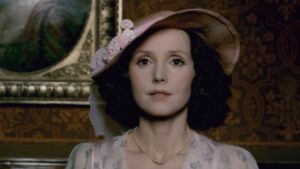
Elżbieta Starostecka in The Leper
One of Poland’s most beautiful actresses – Elżbieta Starostecka. A graduate of the Łódź Film School, she is a talented stage actress who made her big-screen debut in 1964 in Stanisław Różewicz’s “Echo”. Initially, she appeared in comedies. Many viewers remember her as the platoon leader in “The Republic of Women” and the alluring singer in the comedy “How I Unleashed World War II.” She truly showcased the full extent of her talent, however, in period films. She appeared in a cameo in Has’s “The Doll” the TV series “Black Clouds” and in Antczak’s “Nights and Days” (1975). In the film adaptation of Dąbrowska’s novel, she masterfully played Teresa, Barbara’s beloved sister, movingly portraying the tragic romanticism of the character.
Starostecka’s role of a lifetime, however, was Stefcia Rudecka in “The Leper,” directed by Jerzy Hoffman. She played her with extraordinary charm, portraying a sensitive, charming young girl separated from her beloved by heartless class conventions. Starostecka also played an interesting contemporary role in Jan Batory’s crime comedy “The Stolen Collection,” based on a novel by Joanna Chmielewska. She portrayed the clever, resolute Janka, who helps her friend in a private investigation. The actress is married to the well-known composer Włodzimierz Korcz, with whom she has a son and a daughter.
26. Magdalena Zawadzka (1944)
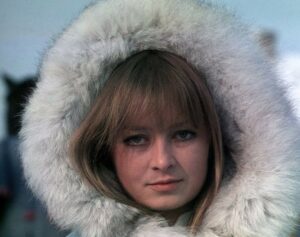
Magdalena Zawadzka in Colonel Wolodyjowski
A leading Polish actress and a major movie star of the 1970s, she took the hearts of Poles by storm. Magdalena Zawadzka graduated from the State Academy of Dramatic Art in Warsaw and performed in theaters. Her film debut was in Rybkowski’s “Meeting in the Fable” (1962). Initially, she was cast mainly in comedic roles, playing modern, spirited young women. This image of the actress was shaped by films such as “No More Divorces” (1964), “Late Afternoon” (1964), and “Baked Beans” (1966).
Her signature film role, however, turned out to be Basia in Hoffman’s “Colonel Wolodyjowski” (1969) and Komorowski’s TV series “The Adventures of Sir Michael”. Zawadzka brought Sienkiewicz’s heroine to life with masterful artistry, endowing her not only with her own beauty but also with wit, cleverness, and a considerable dose of lyricism. On screen, she portrayed her character’s metamorphosis from a carefree girl into a mature, loving woman and patriot.
Another significant role in Magdalena Zawadzka’s filmography was Amelia in Gustaw Holoubek’s “Mazepa”, based on Juliusz Słowacki’s play. She also appeared in Antczak’s “Nights and Days” as Ksawunia Woynarowska, who is in love with Bogumila, and in Zanussi’s “Camouflage” (1979). She currently appears in Polish TV series. Her first husband was Wiesław Rutowicz, and she married Gustaw Holoubek, with whom she has a son, Jan Holoubek, a well-known cinematographer and director.
27. Małgorzata Braunek (1947 – 2014)
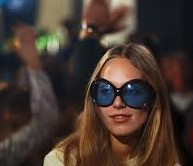
Małgorzata Braunek in Hunting Flies
The next name on the list of the best Polish actresses of post-war cinema: Małgorzata Braunek. She studied at the State Higher School of Theater, but became involved in cinema while still a student. She made her debut in Kazimierz Kutz’s “The Leap” (1967), then appeared in Witold Leszczyński’s “Matthew’s Days”, but her first significant role was the protagonist in Andrzej Wajda’s “Hunting Flies”. She played a cunning seductress – an attractive Polish literature student who seduces a staid, married civil servant. Her girlish image, complete with oversized sunglasses, turned out to be one of the most iconic in Braunek’s career. Yet the role of a lifetime was still ahead of her.
She delivered compelling performances in the film “Lokis: A Manuscript of Professor Wittembach” and in the films of Andrzej Żuławski. However, it was thanks to her portrayal of Oleńka in Hoffmanowski’s film adaptation of “The Deluge” (1974) that she became an immortal star of Polish cinema. Małgorzata Braunek also portrayed Izabela Łęcka in the popular TV series based on Bolesław Prus’s novel “The Doll”.
At the height of her popularity, she abandoned her career to devote herself to travel and meditation. She returned to cinema in the outstanding, Eagle Award-winning role of Marianna in Jacek Borcuch’s “Tulips”. The actress starred in popular TV series based on Małgorzata Kalicińska’s book series, “Dom nad rozlewiskiem.” She was married three times: to Janusz Guttner, Andrzej Żuławski, and Andrzej Krajewski. She had two children: Xawery Żuławski and Orina Krajewska.
28. Stanisława Celińska (1947 – 2026)
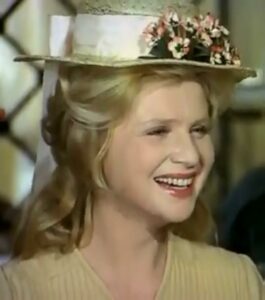
Stanisława Celińska in Nights and Days
A prominent figure among Polish film actresses – Stanisława Celińska. After graduating from the Warsaw Academy of Dramatic Arts, she made a brilliant debut as Nina in Wajda’s film “Landscape After the Battle” (1970). She played Lusia in Stanisław Bareja’s comedy “A Jungle Book of Regulations”. She captivated audiences as Agnieszka, the daughter of the Niechcic family, in Jerzy Antczak’s “Nights and Days” (1975). In the adaptation of Maria Dąbrowska’s novel, she charmingly portrayed the writer’s alter ego. Additionally, she created the character of one of the “Maidens of Wilko” in Andrzej Wajda’s film, based on Jarosław Iwaszkiewicz’s prose. She has appeared in numerous TV series, ranging from the acclaimed production “4 Alternative Street” to “Mommies”. She is a two-time winner of the Eagles Award for supporting roles in the films “Money Is Not Everything” (2001) and “Joanna” (2010).
Stanisława Celińska was married to Andrzej Mrowiec, with whom she had two children. In addition to film and theater acting, her other great passion was music. She came from a family with musical traditions: her father was a pianist and her mother a violinist. She has frequently performed at the Actor’s Song Review, participated in the Opole Festival, and recorded several albums. Her album “Malinowa” has won public acclaim and numerous awards.
29. Ewa Dałkowska (1947)
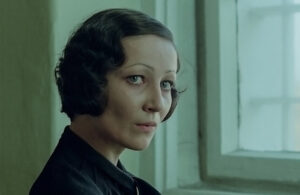
Ewa Dałkowska in The Gorgonowa Case
Ewa Dałkowska graduated with a degree in Polish studies from the University of Warsaw and in acting from the State Higher School of Drama in Warsaw. She has appeared in dozens of films. She made an impressive debut in her very first film role as Olesia Chrobotówna in Antczak’s “Nights and Days”. One of her most memorable roles was Rita in Janusz Majewski’s “The Gorgonowa Case” (1977). Based on a true story of a pre-war crime, the film depicts the trial of a governess accused of murdering her 17-year-old ward.
In Andrzej Wajda’s drama “Without Anesthesia” (1978), Dałkowska played the wife of a well-known journalist (Zbigniew Zapasiewicz), who leaves him after he becomes entangled in political accusations. She played the wife of a well-known journalist (Zbigniew Zapasiewicz), who leaves him after he becomes embroiled in political accusations.
Dałkowska has appeared in films by Agnieszka Holland, Edward Żebrowski, and Janusz Majewski. Among the most notable achievements of Dałkowska’s acting career is Andrzej Barański’s “Woman from the Provinces” (1984). In it, she played a 60-year-old widow who struggles to secure a better future for her children and reflects on her life during various political eras. Her performance in Wajda’s “Korczak” is also worth noting. The actress was married twice. She had a son, Ksawery. She died at the age of 78.
30. Bożena Dykiel (1948 – 2026)
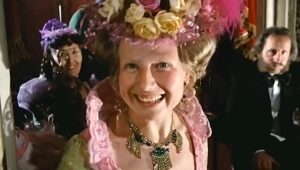
Bożena Dykiel in The Promised Land
A great Polish character actress who created unforgettable roles, often with a caricatured or comedic edge. Bożena Dykiel was a graduate of the State Higher School of Drama in Warsaw and began her career performing in theaters. She made her film debut as Kaśka in Andrzej Wajda’s “The Wedding” (1973). Her second appearance in a film by this director resulted in the most outstanding performance of her career – the role of Mada, the daughter of a German millionaire, whom Borowiecki eventually marries in “The Promised Land”. Audiences loved her for her incredibly natural and funny female characters, such as the TV series character Miećka from “4 Alternative Street” where she played the wife of the caretaker Anioł. She was often cast as simple country girls, as in “Progress” (1974), or as resolute, somewhat domineering women, as in “The Emergency Exit”
Bożena Dykiel also gave a beautiful performance in Łomnicki’s TV series “House” and for 20 years she starred in the production “On Wspólna Street” Together with her husband, Ryszard Kirejczyk, she raised two daughters.
31. Teresa Marczewska (1948)
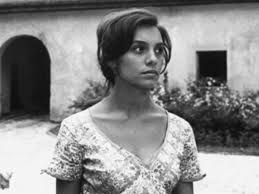
Teresa Marczewska in More than Life at Stake
Teresa Marczewska (née Kamińska), an actress who enjoyed great success in the 1970s and 1980s, graduated from the State Higher School of Drama in Kraków. She appeared in an episode of “More than Life at Stake”. However, she gained the most popularity for her roles in the films of her husband, director Wojciech Marczewski. In “Nightmares” (1978), based on the novel by Emil Zegadłowicz, she played a single mother suffering from tuberculosis. In “Shivers” (1981), she played an attractive camp counselor at a scout camp, brainwashed by Stalinist propaganda, who becomes the object of the main character’s fascination. For this performance, she received an award at the Polish Feature Film Festival in Gdańsk. Marczewska’s third significant role was Małgorzata in “Escape from the Liberty Cinema” (1990).
In addition, the actress appeared in Kieślowski’s “Decalogue, Eight” (1988), playing the translator of books by a renowned professor of ethics, with whom she shares wartime experiences. She appears in TV episodes and series. From her relationship with Marczewski, she has a son, Filip, who is also a director.
32. Ewa Szykulska (1949)
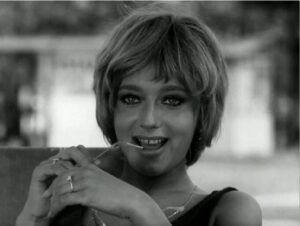
Ewa Szykulska in Water-Puzzle
An actress with a very distinctive, husky voice and striking looks. Ewa Szykulska made her debut in Stanisław Kokesz’s film “Tandem” (1966). She was the star of films by Janusz Kondratiuk, her husband in real life. The most frequently cited character in her filmography is the young postal worker in the film “Marriageable Girls” (1972). Szykulska acted with remarkable naturalness here, creating a believable portrait of a provincial woman dreaming of a better life. She also played Countess Koniecpolska in “The Career of Nicodemus Dyzma” and a seductive instructor in the special section of “Sexmission” (1983). One of her most poignant roles is that of Stacha Wilecka in Wiesław Saniewski’s “Supervision” (1983), a film set in a women’s prison.
In the late 1980s, Ewa Szykulska stopped acting in films and worked at her husband Zbigniew Pernej’s company. She returned in the popular TV series “The Tenants” and “The Neighbours” where she played the comedic character Helena, earning acclaim from both audiences and critics. The actress currently appears in TV series and independent films.
33. Anna Romantowska (1950)
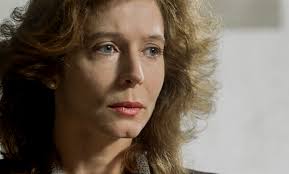
Anna Romantowska in Game Is Over
A highly expressive actress, renowned for her portrayals of sensitive women who grapple with personal dilemmas yet remain strong. Anna Romantowska excels in psychological cinema, playing complex and somewhat enigmatic characters. She graduated from the Warsaw State Academy of Dramatic Arts and made her first significant film appearance in R. Bugajski and Janusz Dymek’s “A Woman and a Woman” (1979).
One of her greatest artistic achievements was her role as Mira Szajnert, a woman broken by Stalinist terror, in the famous “Interrogation” (1989). She received an award for this role at the Polish Feature Film Festival. She portrayed determined heroines who found professional fulfillment in Feliks Falk’s “Game is Over” and “Children and Fish” (1996). Another highly regarded performance by the actress was her role as a modest accountant in Michał Kwieciński’s “The Extras” (2006).
The actress had two husbands: Krzysztof Kolberger and director Jacek Bromski. She has a daughter, Julia Kolberger. Anna Grigo wrote about Anna Romantowska in “Twój Styl”: “Incredibly ambitious, she seeks out only interesting roles. She is yet another example of great, untapped Polish talent.”
34. Anna Dymna (1951)
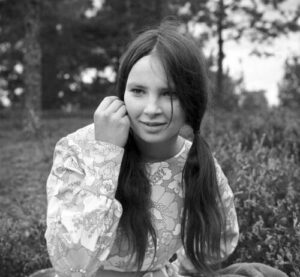
Anna Dymna in 150 Kilometres per Hour
Among Polish film actresses, Anna Dymna is a figure who is particularly beloved and admired for her big heart. Her maiden name was Dziadyk; she took the surname Dymna after her husband, Wiesław Dymny, an artist with the Piwnica pod Baranami theater, who died prematurely of a heart attack in 1978. The actress graduated from the PWST in Kraków and became a permanent member of the Stary Theater, but she began acting in films while still a student. She made her debut in Wanda Jakubowska’s film “150 Kilometres per Hour”.
Thanks to her girlish charm, great figure, and delicate beauty, she played beautiful, spirited, or romantic girls. She played a charming noblewoman in the TV series “Janosik” and the beautiful Countess Barska in “The Leper”. She gained fame for her role as Ania in Chęciński’s comedies “Take It Easy” and “Love or Leave”. Among her most recognizable roles are also Professor Wilczur’s daughter in “The Quack” and, of course, the magnificent Barbara Radziwiłłówna – in the TV series and in Janusz Majewski’s “Epitaph for Barbara Radziwill”
She received the Golden Lions for her role as a journalist struggling with alcoholism in Barbara Sass’s film “Nothing But Fear” (1993). In addition to her outstanding roles, Anna Dymna is known for her charitable work. She is the founder of the “Mimo Wszystko” foundation, which aims to break down barriers for people with disabilities. After the death of Wiesław Dymny, she married twice: first to Zbigniew Szota, with whom she has a son, Michał, and then to director Krzysztof Orzechowski.
35. Krystyna Janda (1952)
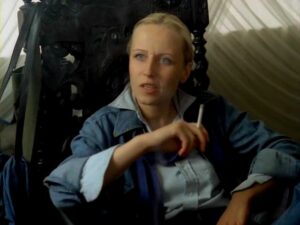
Krystyna Janda in Man of Marble
One of Poland’s most recognizable actresses, she is exceptionally expressive and charismatic. She is distinguished by her deeply emotional acting style. She studied at the State Higher School of Drama in Warsaw and began her film career while still a student. Her first major and one of her most important roles was that of the young director Agnieszka in Andrzej Wajda’s “Man of Marble” (1976). The character was modeled after Agnieszka Holland, a reference evident not only in her profession and name but also in the way the character dresses. Janda, of course, also starred in the film’s sequel, “Man of Iron”.
She played the role of Elżbieta Biecka in the famous film adaptation of Nałkowska’s novel “The Border” (1977) and in the horror film “The Golem”. Janda gained immense international acclaim for her performance in Ryszard Bugajski’s harrowing film “The Interrogation” (1982). It tells the story of singer Antonina Dziwisz, who, during the Stalinist era, is arrested by the UB and subjected to cruel torture, spending several years in prison. For this outstanding performance, the actress received an award at Cannes.
Janda’s other notable roles included the films “My Mother’s Lovers” (1985), Kieślowski’s “The Decalogue”, and the TV series “Modrzejewska”. In 1995, she stepped behind the camera herself to direct “The Pip”. And in the years that followed, she continued to star successfully in films, such as Wajda’s “Sweet Rush” based on a story by Iwaszkiewicz. Just how wonderful an actress she is is evidenced by her outstanding guest appearances in TV series, which are true artistic gems, such as her brilliant role as Czuły’s mother in “Still Here” Krystyna Janda founded two Warsaw theaters: Polonia and Och-Teatr; she is a director and playwright. From her marriage to Andrzej Seweryn, she has a daughter, Maria, while her second husband was Edward Kłosiński, with whom she raised two sons: Adam and Jędrzej.
36. Jadwiga Jankowska-Cieślak (1951 – 2025)
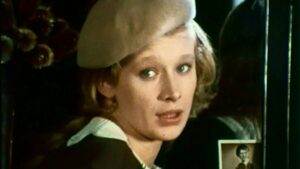
Jadwiga Jankowska-Cieślak in Polish Roads
Full of feminine charm, sensitivity, and warmth, Jadwiga Jankowska-Cieślak ranks among the finest Polish actresses of post-war cinema. A graduate of the Warsaw State Academy of Dramatic Art, she successfully performed in numerous acclaimed theater roles. She made her first appearance on the silver screen in Barbara Sass’s film “The Last Leaf” (1972). Her film debut was an immediate success – she received the Zbyszek Cebulski Award for Best Leading Actress in Janusz Morgenstern’s “To Kill This Love” (1972).
She was cast in roles as delicate heroines who, in difficult situations, are able to demonstrate great strength of character. Notable examples include Kutz’s “From Nowhere to Nowhere” and the TV series “Polish Roads.” In the wartime production, she played Basia Białasówna, a charming young woman in love with the main character, Władek.
Significant roles in Jadwiga Jankowska-Cieślak’s career include: a young woman devoting herself to caring for her blind partner in “Alone” (1977), Kostenka, a doctor in “A Summon” (1996), and the wife of a former UB officer who, years later, learns of his past in “Scratch” (2008). The actress received Golden Lions for these performances. She was awarded the Golden Palm for her role as a lesbian in love with a married woman in the Hungarian film “Another Way” (1982). She was married to actor and theater director Piotr Cieślak, with whom she had three children.
37. Gabriela Kownacka (1952 – 2010)
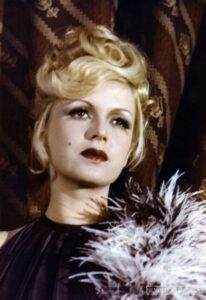
Gabriela Kownacka in The Leper
One of Poland’s most respected and talented actresses – Gabriela Kownacka – passed away prematurely after a serious illness. Born in Wrocław as Gabriela Kwasz, she studied in Warsaw at the State Higher School of Drama. She made her big-screen debut as Zosia in Wajda’s “The Wedding”. She captivated audiences with her beauty, blonde hair, and playful gaze. She masterfully portrayed Countess Rita Szeliżanka in “The Leper” (1975), forming a wonderful duo with Piotr Fronczewski as Count Trestka.
She succeeded in highlighting the character’s self-deprecating humor and the unusual combination of beauty with a slightly mischievous sense of humor. For this cinematic portrayal, she received the Zbyszek Cybulski Award. Her comedic talent was quickly recognized, as evidenced by her excellent role in “Hello, Fread the Beard” (1978). She was cast by the greatest Polish directors: Chęciński, Zaorski, Has, and Falk.
Gabriela Kownacka also played beloved and recognizable roles in TV series. Her performances in “Mothers, Wives, and Lovers” and “Foster Family” proved particularly memorable. She took the surname Kownacka from her husband, actor Waldemar Kownacki, with whom she had a son, Franciszek.
38. Dorota Stalińska (1953)
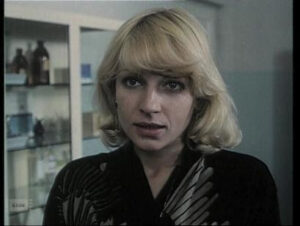
Dorota Stalińska in Without Love
Among post-war Polish actresses, Dorota Stalińska is a talented representative of Polish women’s cinema (created by female directors). After graduating from the State Higher School of Drama in Warsaw, she appeared in “Sexteens” (1971) and in several supporting roles, including in Agnieszka Holland’s “Sunday Children”. However, it was her collaboration with Barbara Sass that brought her fame and artistic fulfillment. It was under this director’s guidance that she played her greatest roles, which won awards at international film festivals (e.g., in San Sebastián). In “Without Love” (1980), she portrayed a self-assured journalist fighting for her career by any means necessary; in “Debutante” (1981), she played an ambitious architect striving to achieve mastery in her field by collaborating with a famous architect. In “The Scream,” she portrayed a thief striving to regain stability in her life after being released from prison.
All these roles set a new standard of femininity in Polish cinema—ambitious, focused on her own professional goals rather than motherhood or family, strong, and uncompromising. Stalińska, however, presented a different image in the role of Hanka Ordonówna in Janusz Rzeszewski’s film “Love Forgives All” (1981). After ending her collaboration with Barbara Sass, the actress was no longer able to land roles on par with those in the series of stories about independent heroines. In her private life, she was married to Krzysztof Kołbasiuk and has a son, Paweł.
39. Grażyna Szapołowska (1953)
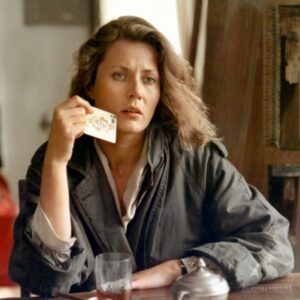
Grażyna Szapołowska in A Short Film About Love
Among Polish actresses who have played sex symbols and seductresses, Grażyna Szapołowska holds a unique place. Initially associated with the Pantomime Theater, she began her film career in Yugoslavian and Hungarian productions: “The Scent of the Earth” and “80 Hussars”. These and other movies – “The Great Pick-up”, “Four-Star Hotel”, and “Big Shar” (1980)—created and cemented her distinctly erotic image. It was not until Károly Makk’s drama “Another Way” that she was portrayed differently. This is considered a groundbreaking film about the lesbian love between Eva (Jankowska-Cieślak) and Livia (Szapołowska).
A distinct departure in the actress’s body of work was her role in Krzysztof Kieślowski’s “A Short Film About Love” (1988), where she was able to showcase her talent for portraying complex, ambiguous characters suffering from loneliness. Szapołowska’s portrayal of Telimena in Wajda’s “Sir Thaddeus” (“Pan Tadeusz”, 999) is also considered one of her most significant achievements. She won a Polish Eagle Award for the role. The actress had three husbands: Marek Lewandowski, Andrzej Jungowski, and Paweł Potorczyn. She has a daughter, Katarzyna. In 2005, she published the book “Kisses.”
40. Joanna Szczepkowska (1953)
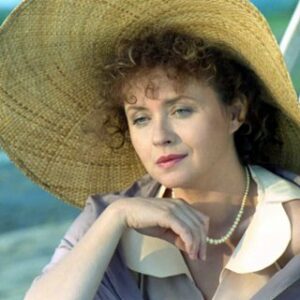
Joanna Szczepkowska in Two Moons
A talented actress who always manages to bring out the essence of her characters, even though she rarely played leading roles. A graduate of the Warsaw State Academy of Dramatic Arts, she made her debut on television in the series “Being Forty”. She made her film debut as the unhappily in love Zosia in Jan Batory’s “Con Amore” and was immediately awarded for the most promising debut. Among her most notable roles is Lidka Jasińska in Jan Łomnicki’s series “House”. There, she played a young woman struggling with the trauma of wartime rape. Among her notable achievements is also the role of Marta, a party activist in Janusz Zaorski’s “The Mother of Kings.” Additionally, she starred in “Lake Constance,” “Chronicle of Amorous Accidents”, “The Stranger,” and “Two Moons.”
Joanna Szczepkowska is also a writer and columnist. In 2010, she became the first woman to serve as president of the Union of Polish Stage Artists. The actress is the granddaughter of Jan Parandowski, the famous author of “Mythology.” Her husband was actor Mirosław Konarowski, with whom she has two daughters: Maria and Hanna.
Bibliography:
“Encyklopedia kina” ed. T. Lubelski, Kraków 2010.


